7 Days Bumdra Trek
Overview
Day by day itinerary
View route map ↗Day 1 Paro to Thimphu - First Impressions
You arrive at Paro International Airport, one of the more demanding approaches in commercial aviation: a steep descent between mountain ridges that requires specially certified pilots. A Druk Asia guide meets you on arrival before the drive to Thimphu, Bhutan's capital. The afternoon is deliberately unscheduled - a walk through town, a first encounter with the architecture, prayer wheels and daily rhythms of a city that moves at its own speed.
Day 2 Thimphu - The Country in Miniature Thimphu
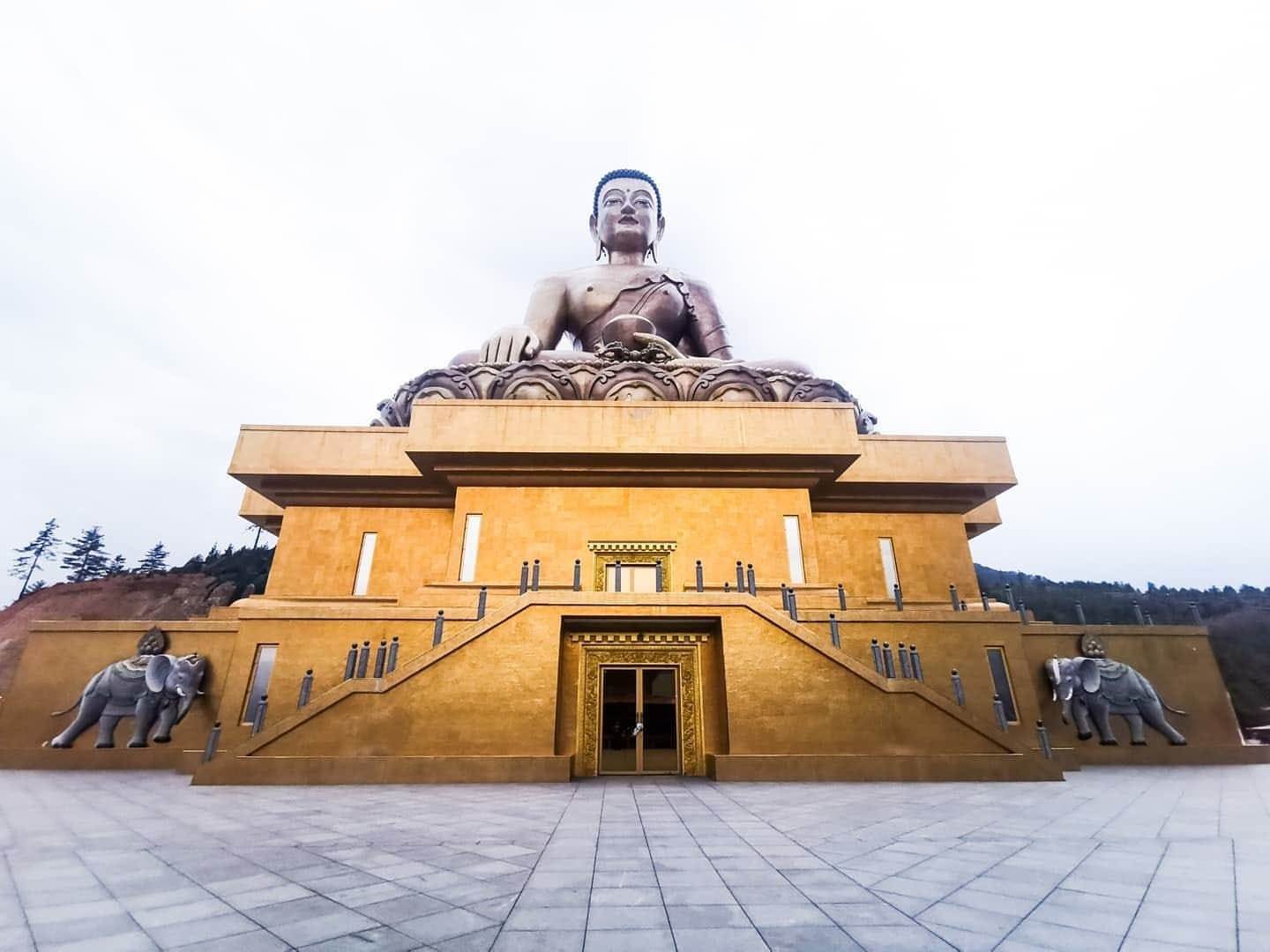
The day opens at Buddha Dordenma, a 51-metre statue overlooking the valley, before continuing to the Memorial Chorten - a place of active daily worship rather than a set piece for tourists. The Motithang Takin Preserve offers a close look at Bhutan's improbable national animal; Simply Bhutan provides broader context on traditional craftsmanship and daily life. The day ends at Tashichho Dzong, seat of both the government and the Central Monastic Body - a combination that tells you something about how power is organised here.
Towering above Thimphu Valley from the tranquil Kuenselphodrang Nature Park, the majestic Buddha Dordenma is a sight to behold. Standing at a staggering 51.5 metres, this golden statue is one of the largest seated Buddhas in the world—and it’s not just its size that impresses. Nestled inside are over 100,000 smaller Buddha statues, each crafted with the same devotion and detail. More than a monument, the Buddha Dordenma is a symbol of indestructibility and spiritual awakening, believed to bless the land with peace and harmony.
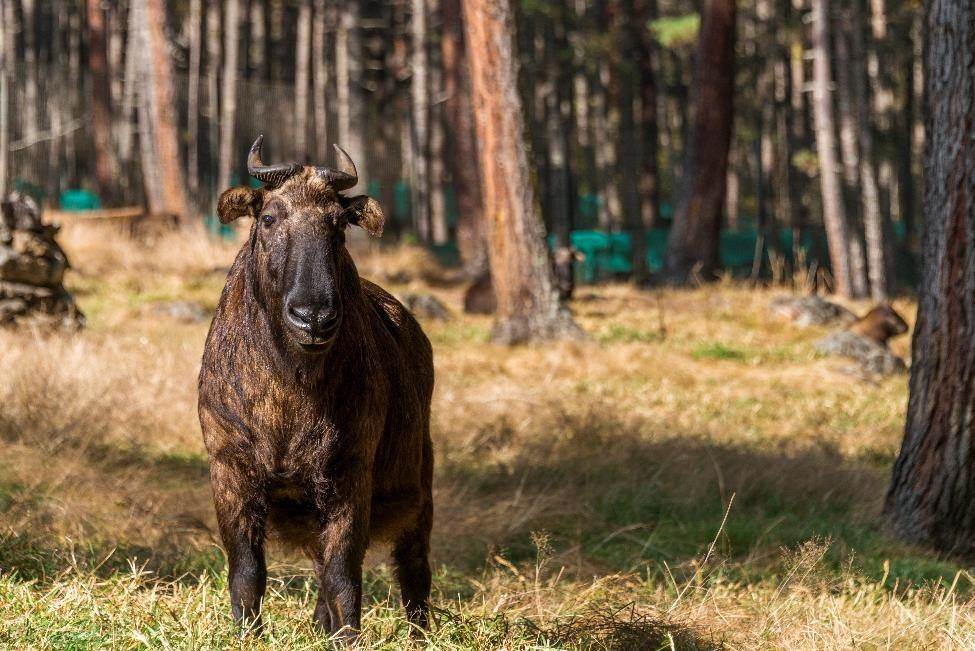
Visiting the Motithang Takin Preserve in Thimphu is a delightful and serene experience—it’s the national animal’s very own sanctuary, nestled just 15–20 minutes from the city centre. What began as a humble mini-zoo became something far more fitting: a forested 3.4-hectare reserve where takin, Bhutan’s unique goat–cow creatures, have chosen to stay even when released into the wild. It’s a charming, low-key wildlife encounter that captures Bhutan’s gentle spirit—perfect for families, nature lovers, and anyone curious about the country’s living symbols.
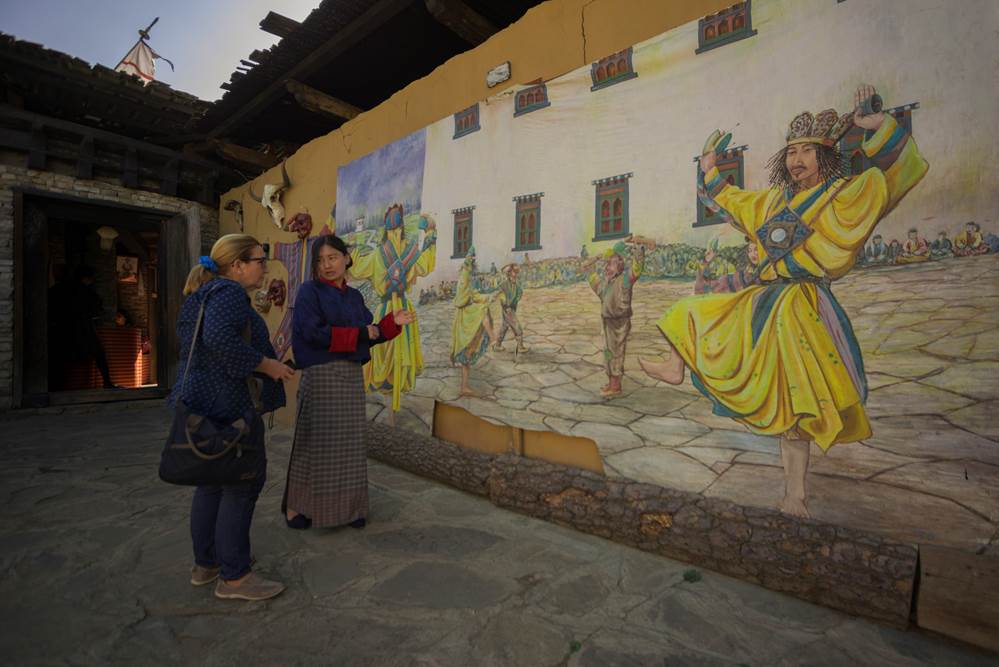
Simply Bhutan is an interactive “living” museum that offers visitors an engaging introduction to Bhutan’s traditional way of life. Upon arrival, guests are welcomed with a sip of arra—a local rice spirit—before being guided through recreated village scenes that capture the essence of rural Bhutan. Along the way, you can slip into traditional attire, try your hand at archery, and listen to Bhutanese women singing as they demonstrate the ancient art of building houses from rammed earth. It’s a vibrant, hands-on experience that brings Bhutan’s heritage to life.
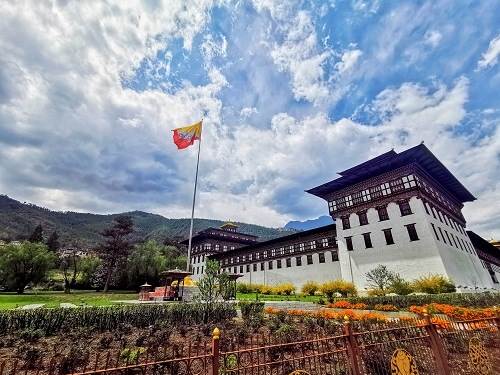
Tashichho Dzong, meaning “Fortress of the Glorious Religion,” is one of Bhutan’s most iconic landmarks. Located along the banks of the Wang Chhu River in Thimphu, it serves as the seat of Bhutan’s government and houses the Throne Room, the offices of His Majesty the King, and several key ministries. It’s also the summer residence of the central monastic body, led by the Je Khenpo. With its imposing whitewashed walls, golden spires, and ornately painted woodwork, Tashichho Dzong is a striking example of Bhutanese architecture. The surrounding gardens and courtyards offer a serene setting, especially when lit up in the evening. Visitors are welcome to explore certain areas of the dzong after office hours, making it not just a centre of political and religious life, but also a window into the living heritage of Bhutan.
Day 3 Dochula Pass and the Punakha Valley
The drive east crosses Dochula Pass, where 108 memorial stupas stand against a Himalayan skyline. On a clear day the high peaks are visible to the north. The descent into Punakha brings a sharp change in climate - warmer, more subtropical, with rice paddies replacing pine forest. Chimi Lhakhang, the Temple of Fertility, sits in the middle of this landscape. Punakha Dzong, built at the confluence of two rivers, is arguably the most beautiful fortress in the country.
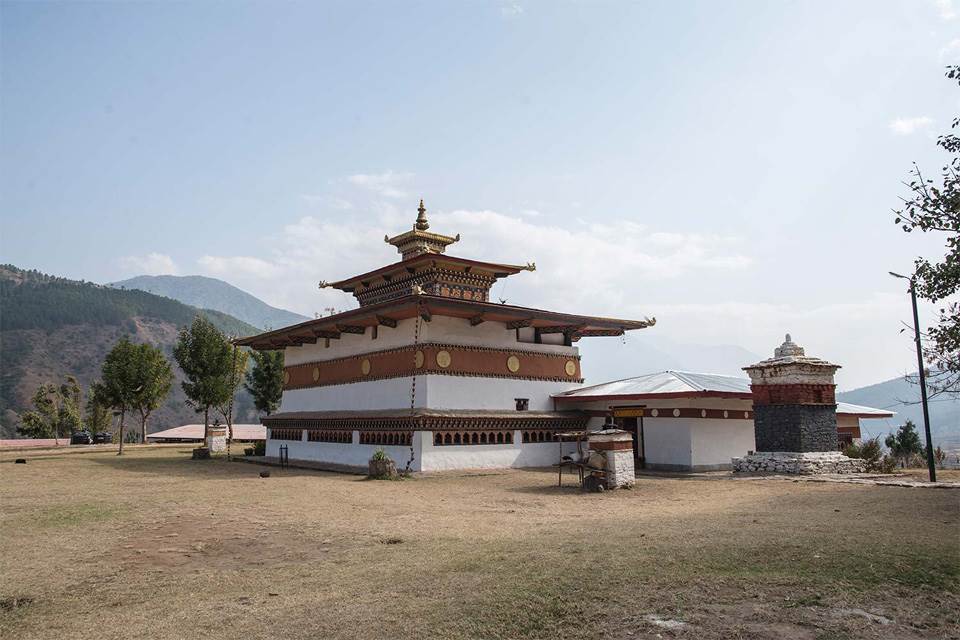
Nestled in the charming village of Sopsokha, Chimi Lhakhang—also known as the Fertility Temple—stands atop a gentle hill near Lobesa. Built in 1499 by Ngawang Choegyel, the 14th Drukpa Hierarch, the monastery is dedicated to the revered and unconventional saint, Lama Drukpa Kunley, famously known as the Divine Madman for his unorthodox teachings and eccentric behavior. To reach the temple, enjoy a scenic 30-minute walk through terraced paddy fields and a quaint village path. Pilgrims from all over the world visit Chimi Lhakhang to seek blessings for fertility, and many couples have returned to share stories of their answered prayers. A visit here offers not only cultural insight but also a peaceful connection with Bhutan’s spiritual traditions.
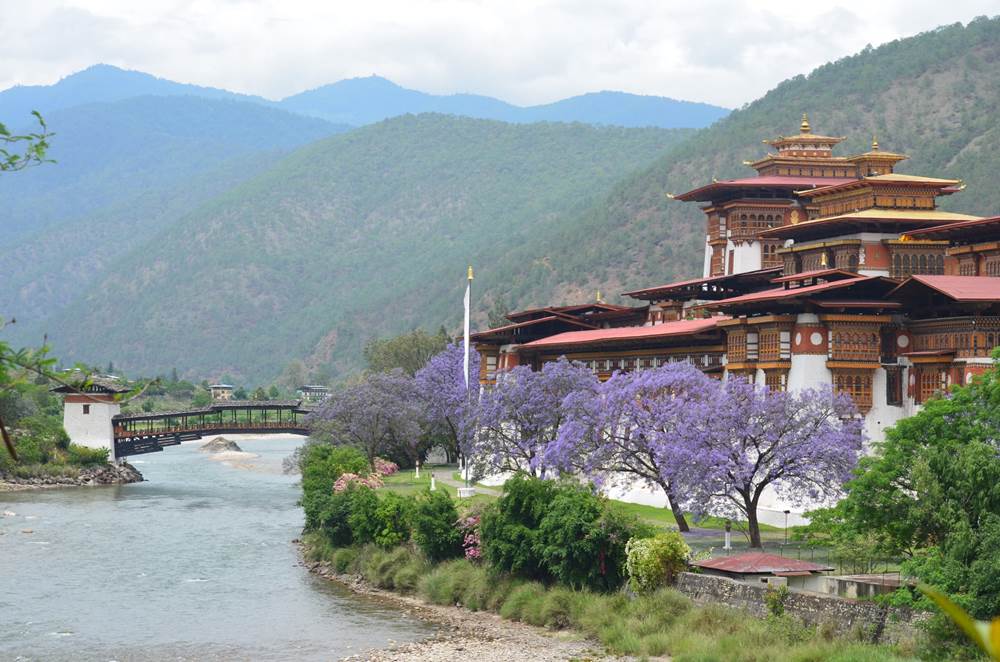
Step into the heart of Bhutanese history and spirituality with a visit to Punakha Dzong, one of the most iconic and breathtaking fortresses in the country. Nestled at the sacred confluence of the Pho Chu and Mo Chu rivers, this architectural masterpiece was built in 1637 by Zhabdrung Ngawang Namgyal, the great unifier of Bhutan. As you cross the traditional wooden cantilever bridge and approach the grand whitewashed walls, you’ll be walking the very grounds where Bhutan’s dual system of governance was first introduced—and where the first King, Gongsar Ugyen Wangchuck, was crowned in 1907. Despite enduring fires and an earthquake, the dzong stands today fully restored—thanks to the vision of the 4th King, Jigme Singye Wangchuck. It now serves as the winter residence of the Je Khenpo, the spiritual head of Bhutan, and houses a monastic community of over 1,000 monks. Marvel at the intricate woodwork and artistry that adorn the halls and courtyards, and let the sacred energy of this historic site leave a lasting impression on your journey.
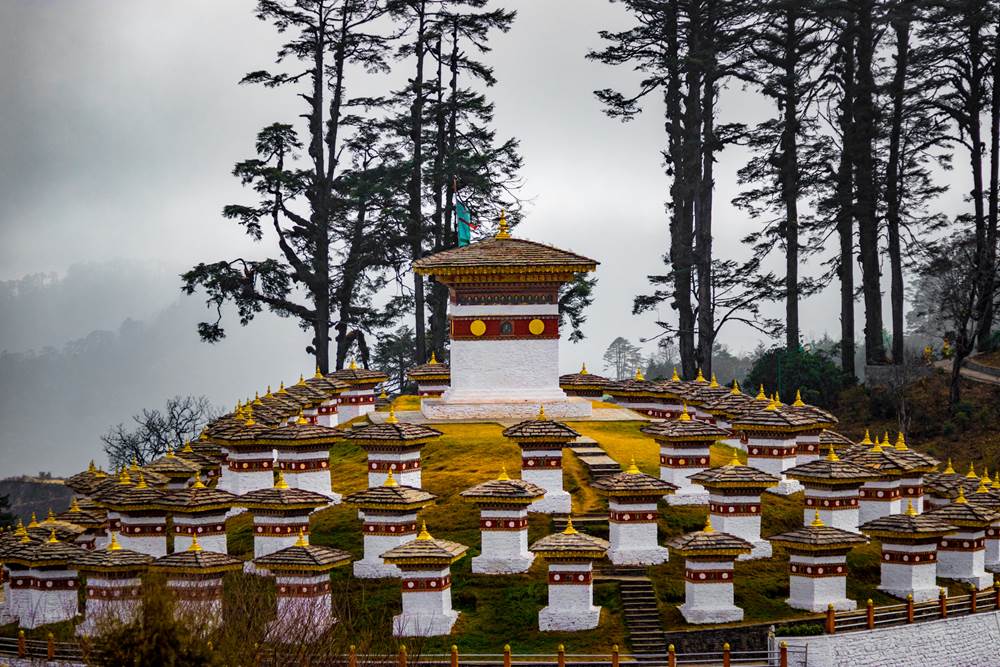
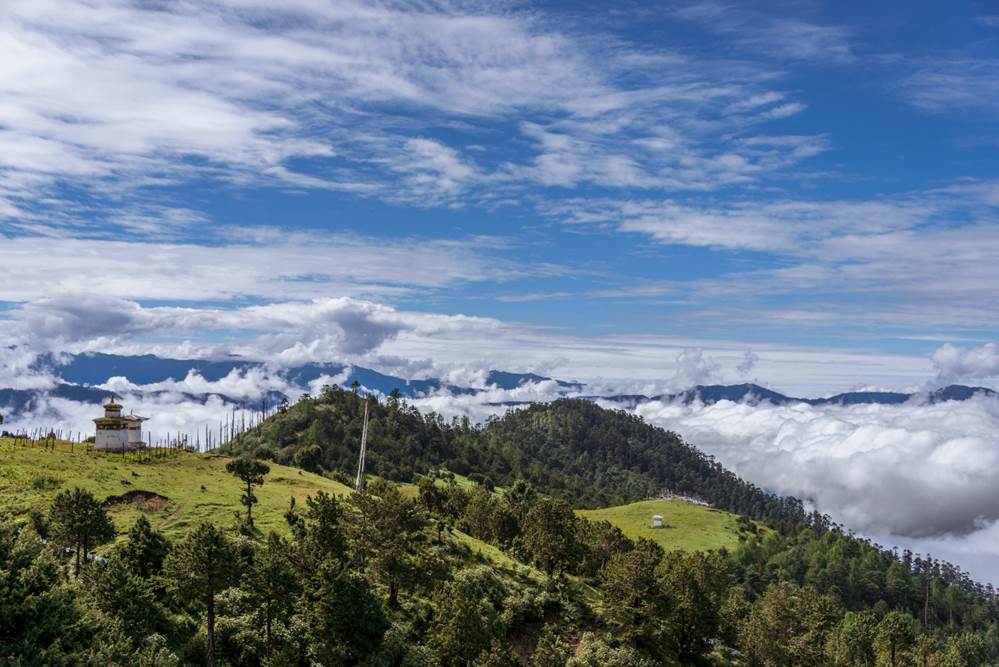
Perched at an altitude of 3,100 metres, Dochula Pass is one of Bhutan’s most serene and awe-inspiring mountain passes. Often cloaked in mist and prayer flags fluttering in the breeze, it’s a place where time seems to slow down. The pass is adorned with 108 memorial chortens, built in honour of Bhutanese soldiers, and offers panoramic views of the snow-capped Himalayan range on clear days. Whether you're pausing for reflection or simply soaking in the stillness, Dochula invites you to breathe deeply, feel the peace, and reconnect with the beauty of the journey.
Day 4 Paro Valley - Temples and Altitude
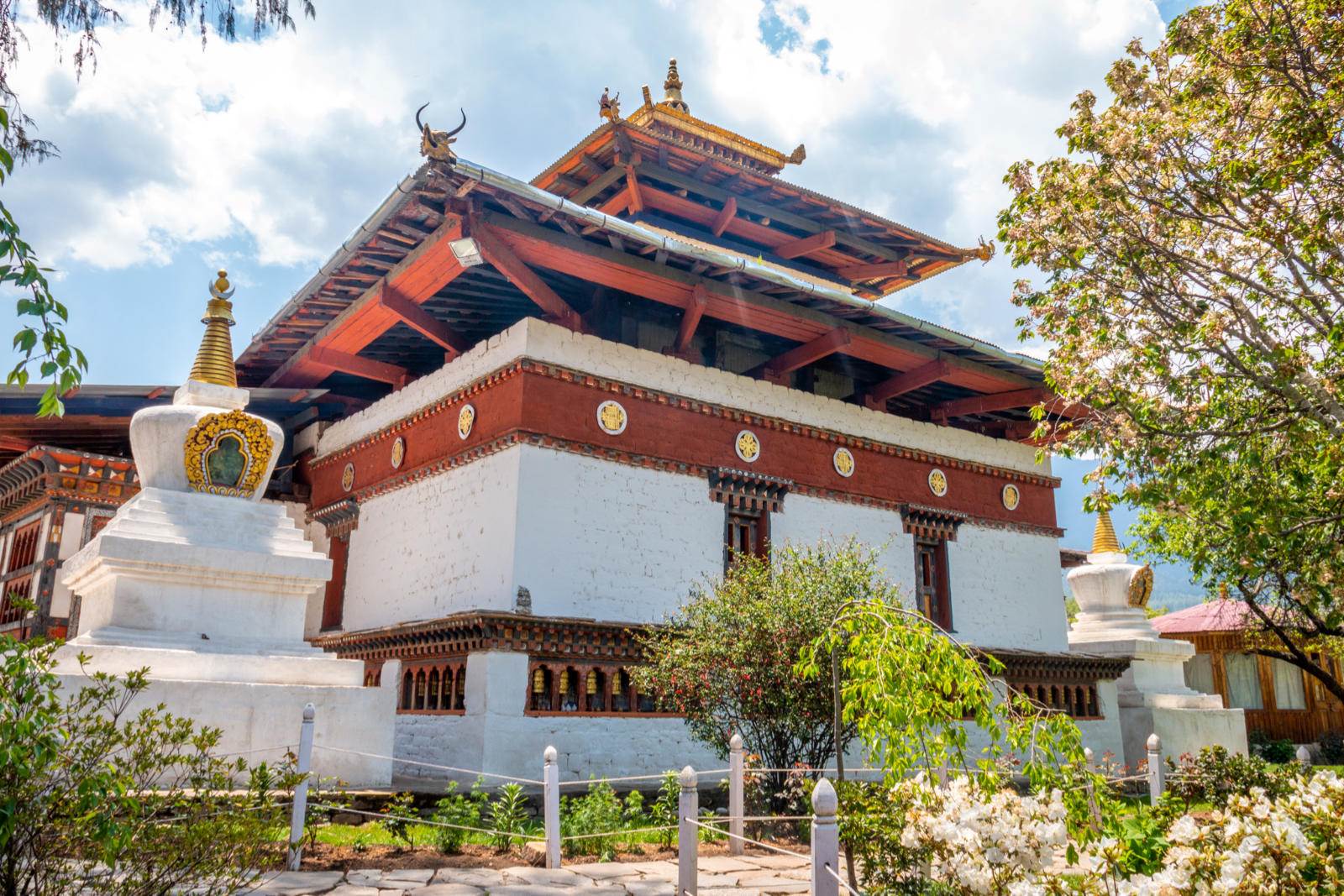
Back in Paro Valley, the day covers two significant sites: Kyichu Lhakhang, one of the oldest temples in Bhutan, built in the 7th century and still in active use; and Paro Dzong, which contains some of the finest traditional wall paintings in the country. The evening is free for a walk through Paro town before the trek begins the following morning.
At 1300 years old, Kyichu Lhakhang is one of Bhutan’s oldest and most sacred temples, believed to have been built in the 7th century by Tibetan Emperor Songtsen Gampo as part of a spiritual mission to subdue a demoness and spread Buddhism. Located just north of Paro, it is often referred to as the “Sacred Jewel of Bhutan.” Over the centuries, the temple has been expanded and visited by many great masters, including Padmasambhava. It's a peaceful and deeply spiritual place, cherished by pilgrims and visitors alike.
Paro Dzong—also known as Rinpung Dzong, or the “Fortress of a Heap of Jewels”—is a spectacular hilltop monastery-fortress overlooking the Paro River and valley. Built in 1646 on an earlier temple site, it remains one of the finest examples of Bhutanese architecture, with soaring wooden beams, an iconic cantilever bridge and numerous shrines and chapels inside. It has served both as a defensive stronghold against Tibetan invasions and as the administrative and monastic centre for Paro district. Today it’s still home to around 200 monks, hosts the colourful Paro Tsechu festival, and offers visitors a serene yet awe-inspiring glimpse into Bhutan’s spiritual and cultural heritage.
Day 5 Into the High Country - The Bumdra Ascent
The trek begins at Sang Choekor, a small monastery above Paro, and climbs steadily through pine and rhododendron forest. The route is used by pilgrims and is not heavily trafficked; the silence above the treeline is one of its qualities. Camp is set at Bumdra Monastery at approximately 3,800 metres, with views across the valley and, on clear evenings, the outline of distant peaks. Altitude acclimatisation matters here. The itinerary is designed to allow a gradual ascent, but guests should be aware that the campsite is high and the temperature drops significantly after dark.
Hike from Sang Choekor Buddhist College (2,800 m) to Yak Pasture below Bumdra Monastery (3,800 m) Your adventure begins with an early morning drive to Sang Choekor Buddhist College, where you’ll meet your ponies. While the gear is being loaded, take a moment to visit the college and offer your respects. The hike starts with a 1–2 hour ascent along a forested ridge—steep at times, but shaded and peaceful. Soon, you’ll reach a scenic clearing adorned with prayer flags, offering breathtaking views of both the Paro and Do Chhu valleys. After another 1–2 hours of trekking, you’ll arrive at Chhoe Tse Lhakhang, a secluded temple nestled on the mountainside. The trail then continues upward. A final steep push brings you to a vantage point overlooking Paro Airport and the distant snow-capped Himalayas. From here, a 20-minute climb through prayer-flag-strewn ruins leads into an ancient forest. After about 40 minutes of walking under the forest canopy, the path opens into a vast alpine meadow, dotted with sacred chortens and fluttering prayer flags—a serene end to a truly rewarding hike.
Day 6 The Descent to Taktsang - A Rare Approach
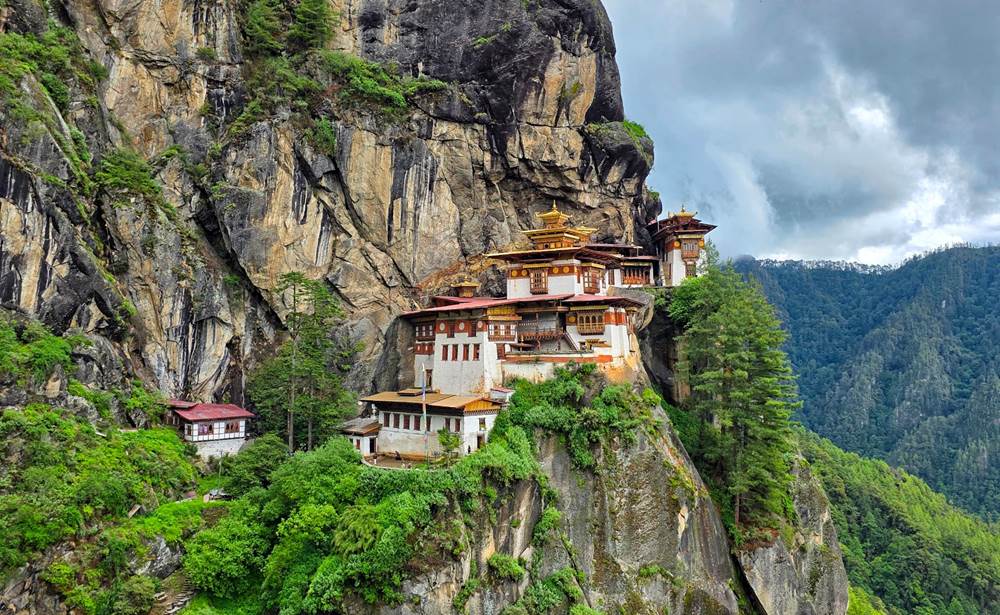
The morning descent from Bumdra brings the trek to its defining moment: arriving at Taktsang Monastery from above. The monastery is built into a cliff face at 3,120 metres and is one of the most significant religious sites in Bhutan. Most visitors approach from below; this route arrives from the ridge, which offers a different relationship with the site and with the landscape around it. After visiting the monastery, the descent continues to Paro town. The afternoon is unscheduled.
They say, "a visit to Bhutan is not complete without climbing up to the Tiger's Nest". Taktsang Monastery, famously known as the Tiger’s Nest, is Bhutan’s most iconic landmark, dramatically perched on a cliffside 3,120 metres above sea level in Paro Valley. According to legend, Guru Padmasambhava flew to this site in the 8th century on the back of a tigress and meditated in a cave that now lies at the heart of the monastery. Built in 1692, the complex includes temples, meditation caves, and stunning viewpoints that seem to defy gravity. Reaching the monastery involves a scenic 2–3 hour hike through pine forests and fluttering prayer flags—a spiritual and physical journey that rewards you with breathtaking views and deep serenity.
Day 7 Departure from Paro
Transfer to Paro International Airport for departure. Depending on your onward flight, there may be time for a final walk or a last breakfast in Paro before the transfer.
What's included
- Guided tour
- Visas for Bhutan
- Airport transfers
- Daily 3 meals (B/L/D) at designated restaurants or hotels
- Accommodation at 3 star hotel
- A qualified & licensed English-speaking guide
- An experienced driver
- A tour vehicle
- Entry fees & road permits
- Government fee, royalty, taxes & surcharges
- Mineral bottled water
- Set of traditional costume (to be returned at the end of your stay)
- Full service & assistance before, during and after your Bhutan trip
- Flight into Bhutan via Drukair (can be arranged with us)
- Flight on other airline to catch Drukair flight
- Meals at 4-5 star restaurants
- Hotel stay outside of Bhutan
- Expenditure of personal nature
- Travel insurance (can be arranged with us)
- Tips for the guide and driver
- Alcoholic drinks
Bhutan's leading travel specialist.
We're Bhutan's largest tour operator and leading travel specialist with more than a decade of experience, creating personalised, authentic and immersive journeys for travellers all around the world.
What travellers say
The visit to the Hermitage at Punakha and the trek up to Bumdra are particularly enjoyable.
We returned safe and sound, survived the challenging trekking and Tiger Nest excursion!
Many thanks to you to begin with, who made our travel plan came true, and a very enriching and smooth one.
I would like to write a heartfelt thankful testimonial to add on to your homepage, sharing some beautiful pictures as well. Like many other posted reviews, I sincerely hope that all your good effort and great team work will bring more interested tourists to your lovely and happy country.